
Introduction
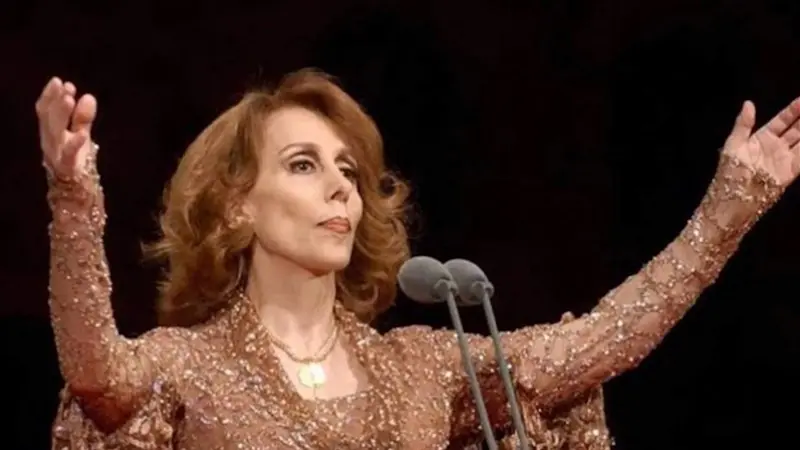
Fairouz, born Nouhad Wadi Haddad on November 21, 1934, in Beirut, Lebanon, is considered one of the greatest and most beloved singers in the Arab world. Her deep and powerful voice, paired with her distinct style, has made her a symbol of Lebanese pride and a global icon of Arabic music.
Early Life & Career
Fairouz’s musical journey began in the early 1950s when she joined the Lebanese Radio, where her vocal talent quickly became evident. She rose to fame after collaborating with the Rahbani Brothers, Assi Rahbani and Manuel Rahbani, whose musical compositions helped shape her signature sound. Fairouz’s breakthrough came with the release of songs like “Zahrat Al-Mada’en” and “Bint El Shalabeya”.
Success & Major Hits
Fairouz’s career spans over six decades, and she has recorded countless songs that have become anthems in the Arab world, including: “Zahrat Al-Mada’en” – A tribute to Jerusalem, it remains one of her most famous songs.
“Bint El Shalabeya” – One of her early hits that captured hearts across the Middle East.
“Kifak Inta” – A song that became synonymous with Lebanese nostalgia and romanticism.
“Li Beirut” – An emotional and iconic song reflecting her love for the city of Beirut.
Major Achievements
Multiple International Awards for her contributions to Arabic music
Over 30 albums released, with millions of copies sold worldwide
Recognition as the Voice of Lebanon: Her songs have defined generations and become symbols of Lebanese culture
Global Influence: Her music continues to inspire artists and music lovers worldwide.
Legacy & Influence
Fairouz is often referred to as the “First Lady of Arabic Music”, and her voice has become synonymous with classical Arabic music. Her ability to convey emotion through music, along with her distinct voice, has made her an enduring symbol of Arab identity and culture.